
Delray Beach Counseling
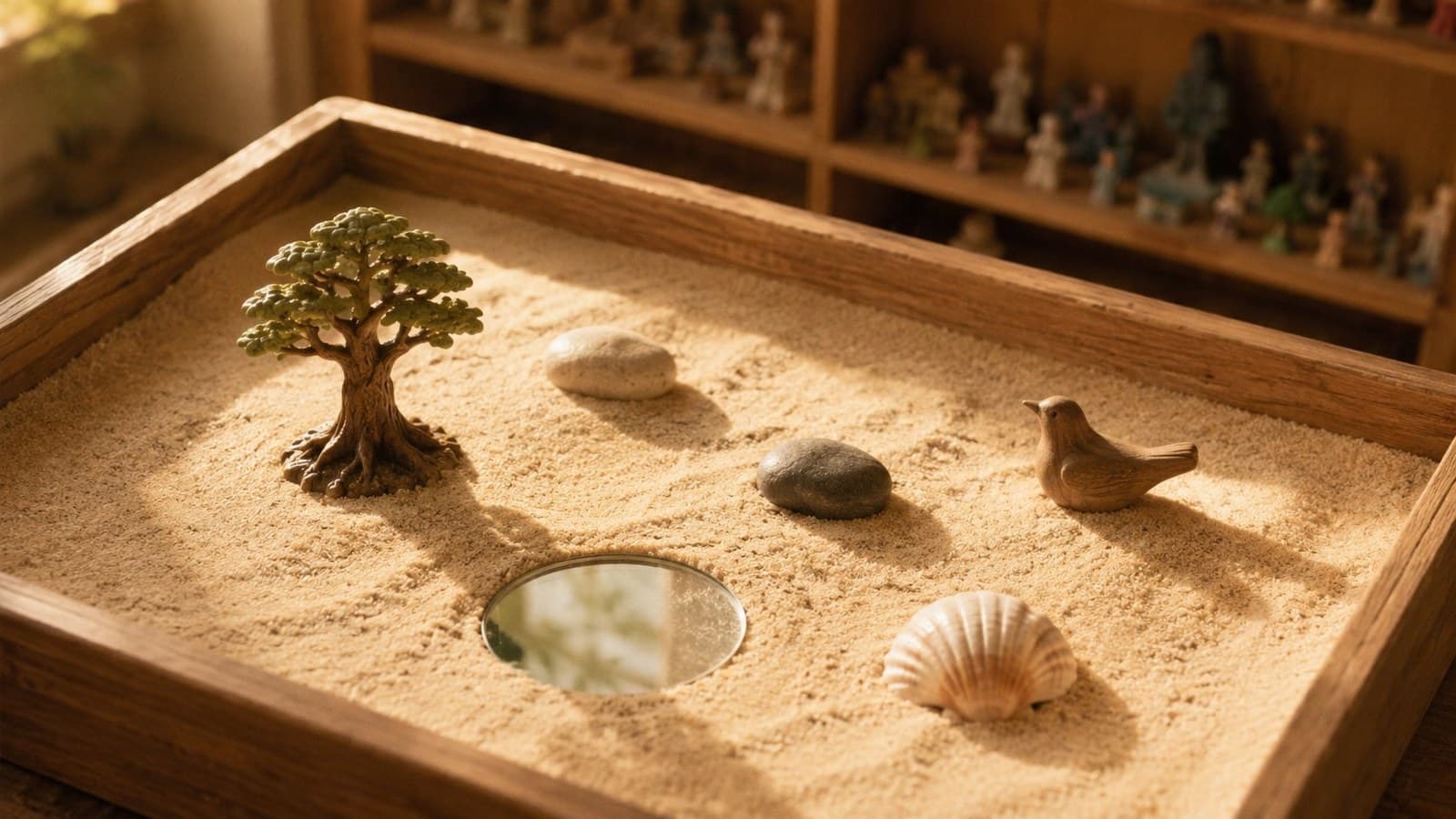
Sand tray therapy setup with hand-sculpted sand and a curated collection of miniature figurines arranged on shelves

Sand Tray Therapy

Sand tray therapy with a national speaker on the modality

Dr. Mindy Parsons is a Registered Sand Therapist Consultant & Trainer (RST-C/T) and a presenter on sand tray therapy at the Association for Play Therapy, American Counseling Association, World Association of Sand Therapy Professionals, and the North American Society of Adlerian Psychology.

Call or text for availability.

Sand tray therapy is a clinically grounded, non-verbal modality that uses a tray of sand and a curated collection of small figurines as the medium for therapeutic work. Where talk therapy moves through language, sand tray moves through image: a scene you build, a world you arrange, an inner experience made suddenly visible. It is one of the few modalities that lets the body and the imagination do the work that words sometimes can't reach.

A modality with depth, and a clinician who teaches it

What is sand tray therapy

Developed in the mid-twentieth century from the work of Margaret Lowenfeld and Dora Kalff, sand tray invites you to build a scene inside a shallow tray of sand using small figures, natural objects, and symbolic items. The tray becomes a contained space for whatever is currently alive in you: grief, conflict, a decision you can't quite articulate, a memory that keeps returning. The work happens through the building, not through explaining.
Who benefits most

Sand tray is especially useful when language has become a barrier rather than a bridge, after a trauma, in the middle of a complicated grief, during a life transition that feels too big to summarize. It is also valuable for clients who simply find verbal therapy challenging, including children, neurodivergent adults, and people working through experiences that pre-date language. However, sand tray can be helpful for many clients as an adjunct to traditional talk therapy.

How Dr. Mindy practices

Sessions are unhurried. You'll be invited to build a scene without instructions about what it should look like. Dr. Parsons witnesses your creation alongside you and stays quiet during the build itself, then gently helps you look at what's emerged once the scene is complete. There's no interpretation imposed on you: the meaning belongs to the tray and to you. Discussing the symbolic meaning of the tray is always an option for deeper insight and understanding.

Who this helps

  • Children processing big feelings or experiences they can't yet describe
  • Adults navigating grief, loss, or a transition that resists language
  • Couples working on the dynamics that show up underneath their conversations
  • Trauma survivors looking for somatic, non-verbal entry points
  • Older adults, including clients living with early-stage neurocognitive conditions (a focus of Dr. Parsons' doctoral research)

What to expect

  1. 1

    Settling in

    We start with a few minutes to arrive: checking in, reviewing what's on your mind, and deciding together whether the tray is the right entry point today.

  2. 2

    Building the scene

    You'll choose figures and objects without any prompts about what to make. Dr. Parsons stays present but quiet during the build itself, giving the scene room to take its own shape.

  3. 3

    Witnessing what emerged

    Once the scene is complete, we look at it together. You decide what to notice, what to name, and what to leave for later. The tray is photographed (if you'd like) and dismantled with care.

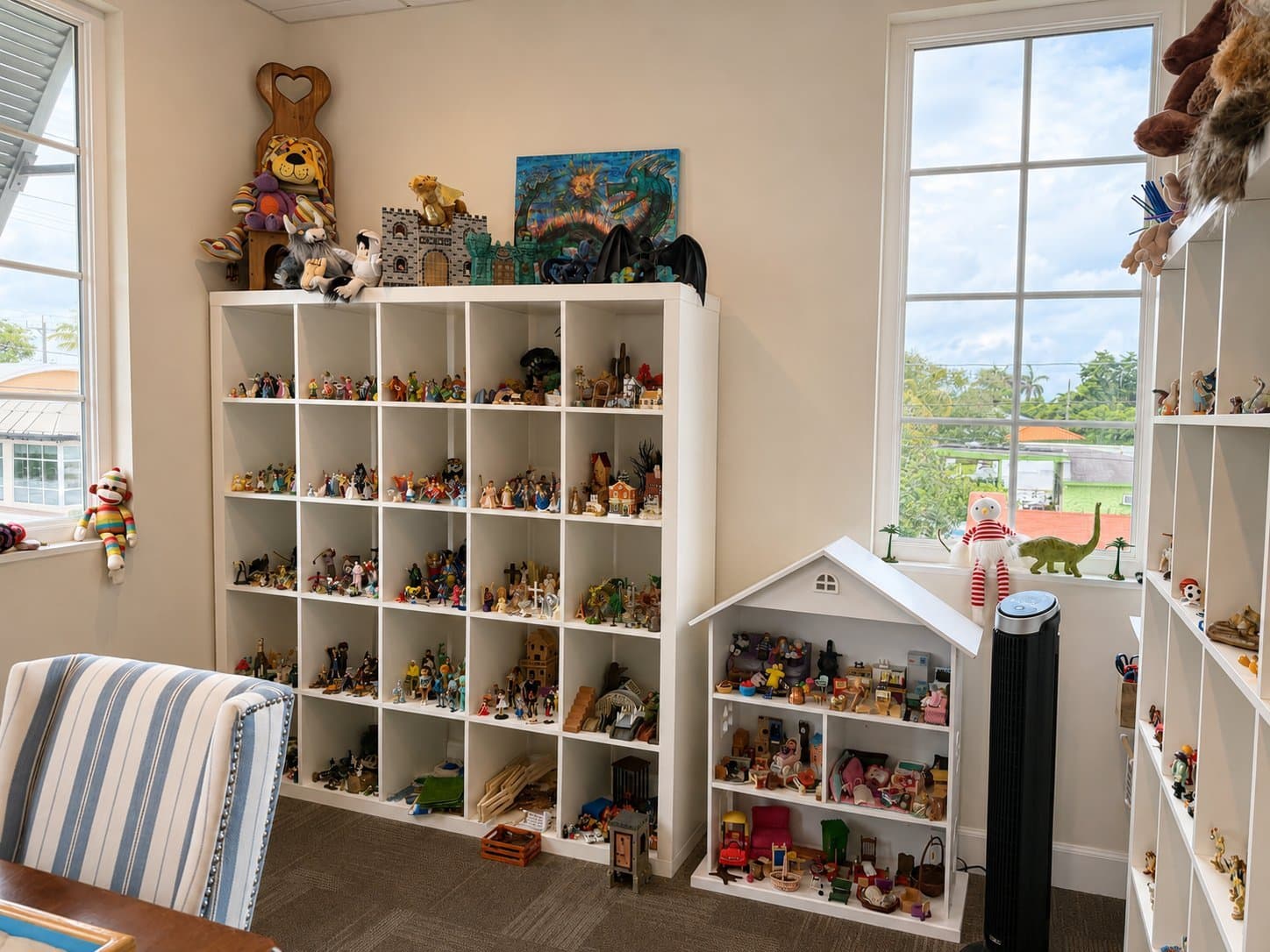
Shelves of figurines and miniatures used in Dr. Parsons' sand tray therapy practice in Delray Beach.
The collection. Clients choose from hundreds of miniatures and natural objects to build their scene.

Frequently asked questions

  • Is sand tray therapy just for kids?

    No. Although sand tray is widely used with children, the modality was developed for adults and is just as effective across the lifespan. Dr. Parsons works with adults, couples, and families in the tray, and her doctoral research focused specifically on sand tray with older adults living with neurocognitive conditions. For many adult clients, the non-verbal nature of sand tray is precisely what allows new material to surface.

  • How is it different from talk therapy?

    In talk therapy, the work moves through language. In sand tray, the work moves through image: you build a scene in a tray of sand using small figurines and objects, and the scene itself becomes the entry point. That shift around verbal narration tends to bypass the more rehearsed parts of how we describe ourselves, opening up material that talk alone can take much longer to reach.

  • Can sand tray be done over telehealth?

    Some adapted forms can be. Digital sand tray platforms, photo-based work, and 'home tray' setups have all evolved over the past few years. That said, the in-person experience of tactile sand and three-dimensional figurines is meaningfully different and is what Dr. Parsons recommends when geography allows. We can discuss what makes sense for your situation during the consultation.

  • Do you train other clinicians?

    Yes. Dr. Parsons is a Registered Sand Therapist Consultant & Trainer (RST-C/T) and a regular presenter at the Association for Play Therapy, American Counseling Association, World Association of Sand Therapy Professionals, and the North American Society of Adlerian Psychology. Clinicians interested in supervision or consultation on sand tray work are welcome to reach out through the contact form. Follow her training work on Instagram @TheSandTrayStudio.

  • How long is a typical sand tray session?

    All sessions are 50 minutes. Time spent building in the tray varies from session to session.